Market Intelligence
Storage + Insurance Playbook for Low-Usage Exotics
Post-close execution quality drives resale confidence and ownership experience. A disciplined storage and insurance framework protects both value and flexibility.
January 21, 2026 · Guards Concierge Team · 10 min read
Why Post-Close Operations Decide Real Outcomes
Most buyers focus intensely on acquisition and then treat post-close logistics as administrative cleanup. In reality, the first 30 to 90 days of ownership often determine whether a vehicle remains easy to enjoy and easy to exit. Insurance mismatches, storage shortcuts, delayed registration, and inconsistent maintenance records create friction that compounds over time. That friction shows up later as reduced buyer confidence, slower resale velocity, and avoidable ownership stress.
For low-usage exotics in particular, condition preservation is not passive. Vehicles that are driven infrequently can degrade faster than expected if battery care, tire cycling, fluid management, and environment control are not handled correctly. Owners often assume that fewer miles automatically means better condition. The market does not see it that way. Sophisticated buyers now ask for evidence of disciplined care, not just low odometer readings.
At Guards, we treat post-close setup as a continuation of acquisition strategy. The goal is to protect value, reduce friction, and preserve optionality from day one.
Insurance Architecture: Price Is Not the Only Variable
Insurance selection should begin with coverage architecture, not quote sorting. Owners frequently optimize for premium cost while overlooking valuation method, usage limits, repair network quality, transport coverage, and claim-handling responsiveness. In premium segments, those details can have larger financial impact than small differences in annual premium. A policy that appears cheaper can become costly if claim resolution is slow, parts sourcing is constrained, or payout assumptions diverge from market reality.
Agreed value frameworks are often attractive for collectible or low-mile examples, but they are not automatically ideal in every ownership scenario. Policy language, usage declarations, and update cadence matter. If vehicle value changes meaningfully during ownership and coverage is not recalibrated, protection may drift away from actual exposure. We advise periodic valuation reviews rather than set-and-forget policy behavior.
Carrier selection should also reflect ownership profile. A client with multiple specialty vehicles, transport activity, and track-adjacent use cases needs a different insurance structure than a single-vehicle weekend owner. Matching policy design to actual behavior is the only reliable way to avoid surprise coverage gaps.
Storage Strategy: Environment, Access, and Protocol
Storage quality is often reduced to a simple binary of indoor versus outdoor. That is not enough. Effective storage strategy includes temperature stability, humidity control, security standards, fire suppression quality, battery maintenance protocol, tire pressure routine, and documented inspection intervals. If any of these are inconsistent, condition risk rises even in premium facilities.
Access model also matters. Some owners benefit from private enclosed storage with curated access and strict handling standards. Others need managed facilities that support regular transport, service dispatch, or multi-vehicle rotation. The right choice depends on drive cadence, maintenance logistics, and geographic context. Convenience without protocol can erode condition. Protocol without practical access can reduce enjoyment and increase process fatigue.
We recommend selecting storage with explicit written procedures, not verbal assurances. A documented operating standard creates accountability and makes handoffs cleaner when ownership teams or facilities change.
Battery, Tires, Fluids, and Start Cycle Discipline
Low-usage ownership requires active mechanical stewardship. Battery health is the most commonly overlooked variable. Trickle maintenance should be based on manufacturer-compatible systems and monitored for reliability rather than assumed. Intermittent battery neglect can lead to avoidable electronic faults and service disruptions that degrade ownership experience and can appear in service history narratives later.
Tire and fluid management are equally important. Long static periods increase risk of flat spotting, pressure drift, and uneven material stress. Fluids can also degrade on time basis even with minimal mileage. Owners should define a maintenance rhythm tied to both calendar intervals and limited-use realities. Relying solely on mileage triggers is not enough for this category.
Engine start cycles should be intentional. Brief idle sessions without proper warm-up and operating conditions can create more harm than benefit. If the vehicle is being run, it should be run correctly. If it is being stored, storage protocol should be robust enough that unnecessary start events are minimized.
Documentation Hygiene and Future Liquidity
Future buyers increasingly underwrite owner discipline through documentation quality. Service invoices, transport records, storage logs, insurance history, and condition assessments all contribute to confidence. Missing or inconsistent records create uncertainty, and uncertainty widens negotiation spreads in favor of the buyer at your expense. Documentation is therefore not clerical overhead. It is a value-preservation asset.
We advise clients to maintain a centralized ownership record from day one. That record should include key dates, work performed, facility details, and any cosmetic or mechanical interventions. High-quality documentation reduces friction at resale, accelerates diligence, and supports stronger pricing posture when comparable inventory quality is mixed.
This is especially important for owners who plan to rotate vehicles within 12 to 36 months. The shorter the hold window, the more critical immediate documentation quality becomes because there is less time to repair narrative gaps before exit.
Transport and Service Coordination
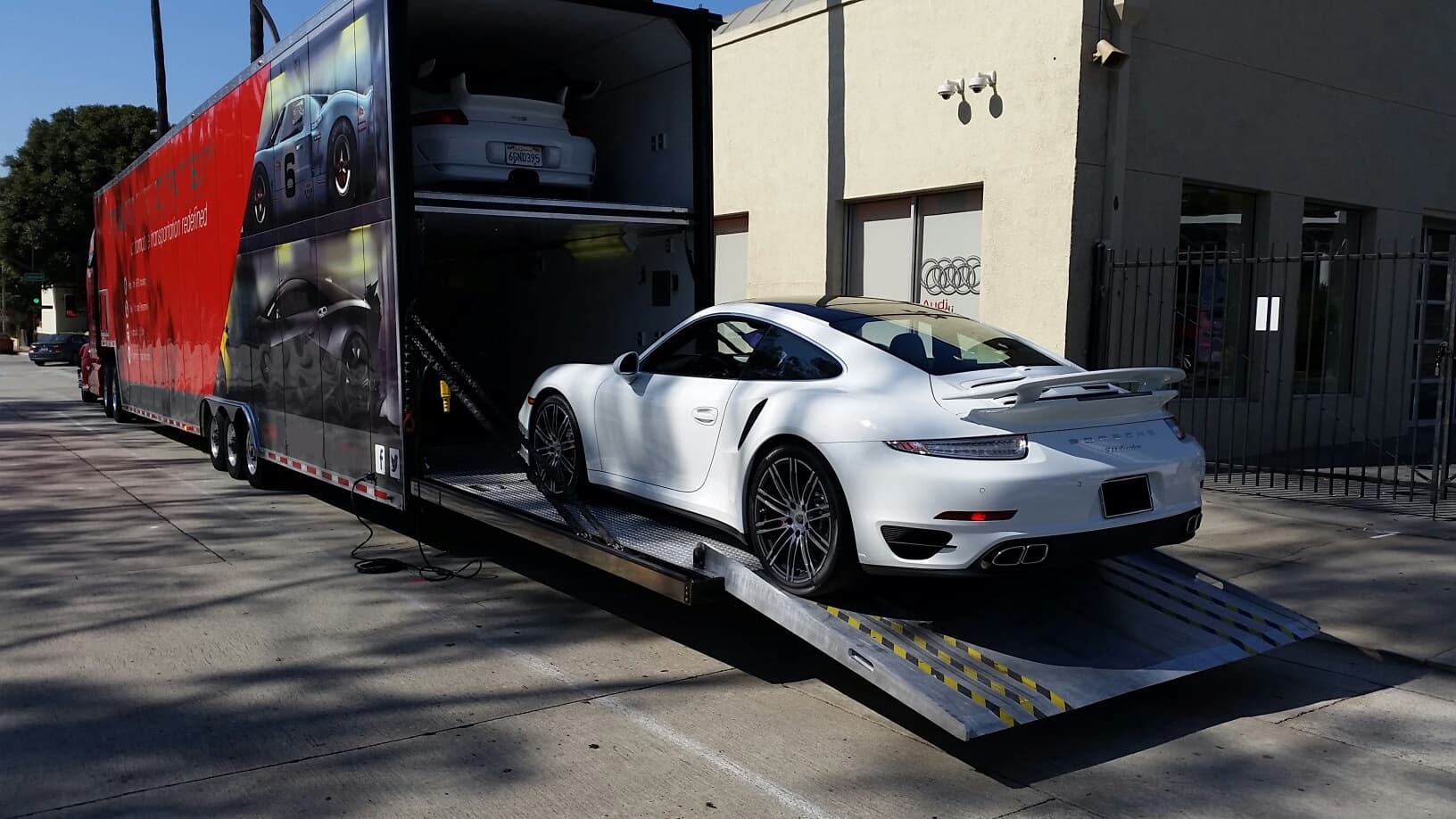
Transport quality influences both condition and client experience. Carrier selection should account for equipment standards, route planning reliability, insurance adequacy, and handling reputation with low-clearance, high-value cars. Cheapest transport is rarely cheapest after risk-adjusted outcome. Minor loading damage or scheduling failure can consume more value than the entire premium paid for better execution.
Service center strategy should be set early and aligned to the ownership goal. Owners focused on preservation and resale confidence should prioritize centers with strong model-specific competency, transparent documentation, and predictable scheduling. Reactive service behavior usually creates bottlenecks, especially in seasonal demand peaks.
Integrating storage, transport, and service into one coordinated calendar reduces drop-offs and decision fatigue. This is where concierge support delivers disproportionate value: fewer missed intervals, cleaner records, and higher reliability in day-to-day ownership.
Risk Controls for Multi-Car Owners
Clients with multiple specialty vehicles face compounding complexity. Insurance interactions, storage assignments, maintenance windows, and usage tracking quickly become fragmented without system-level oversight. Fragmentation creates hidden risk: duplicated costs, coverage mismatches, neglected service intervals, and inconsistent documentation quality across the collection.
A portfolio-level operations framework should define vehicle-specific plans while preserving centralized visibility. We recommend one shared dashboard or master log with ownership cadence, policy renewal calendar, service deadlines, and condition checkpoints. This avoids the common failure mode where each car has partial management but no unified control.
The objective is not administrative perfection. It is reliable control with low cognitive load so the owner can enjoy the collection while preserving value and flexibility.
First 30-Day Implementation Plan
Within the first week, finalize insurance architecture, confirm agreed value assumptions where relevant, and map usage declarations to actual ownership plan. In parallel, establish storage placement with documented handling protocol and verify battery, tire, and environmental controls. By week two, complete registration and title support tasks and lock primary service-center relationship.
Weeks three and four should focus on baseline condition capture and documentation setup. Capture paint and interior condition records, consolidate purchase and transport paperwork, and establish recurring calendar reminders for maintenance and policy reviews. If multiple vehicles are involved, deploy standardized record format so future diligence is clean and comparable across assets.
Owners who complete this 30-day setup consistently report lower friction, fewer surprises, and stronger confidence in both usage and resale planning.
Bottom Line
For low-usage exotics, ownership quality is an operational discipline, not a passive outcome. Insurance design, storage protocol, service cadence, and documentation hygiene all directly influence value retention and future liquidity. Ignore them and ownership gets expensive in hidden ways. Execute them well and both enjoyment and financial outcomes improve.
The strongest clients treat post-close planning as part of the deal itself. That mindset creates cleaner ownership, clearer exits, and less avoidable risk. In a market where buyers increasingly reward credibility and condition certainty, operational discipline is no longer optional. It is part of the edge.